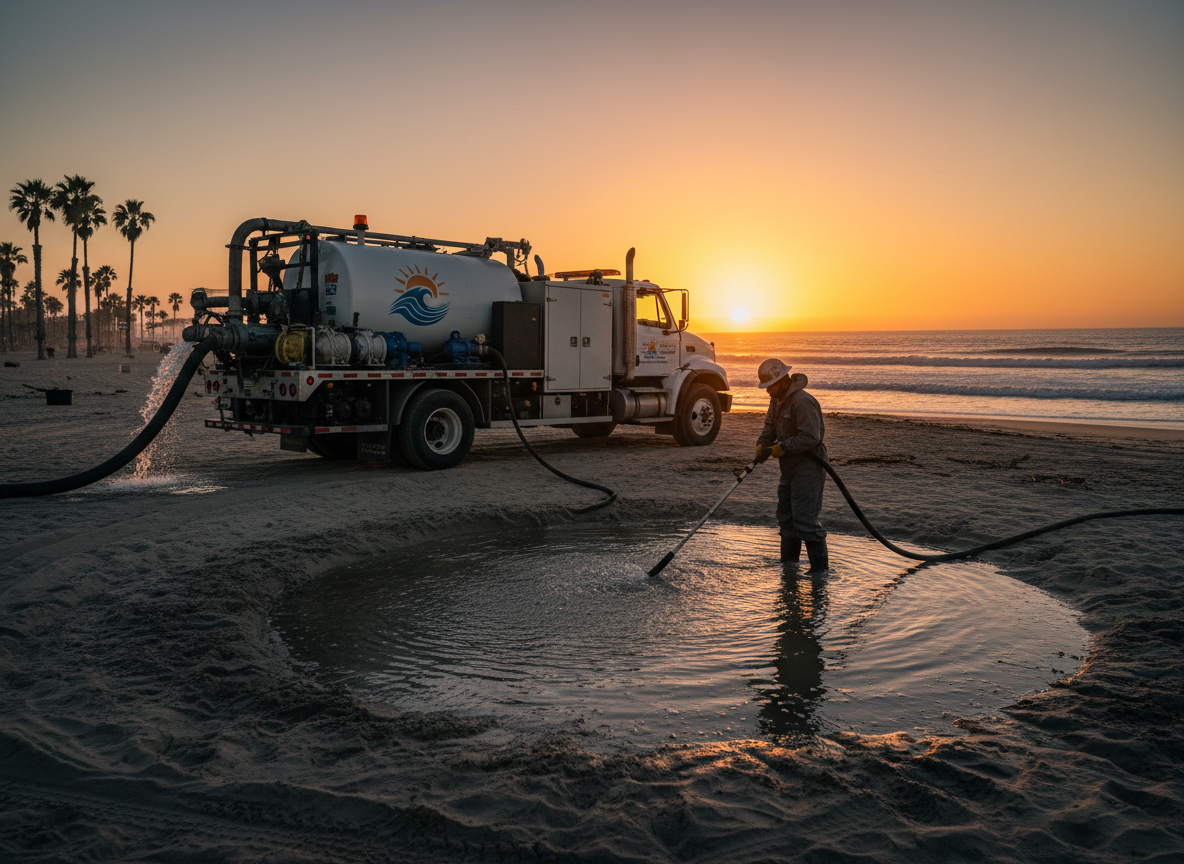
Sunset Beach homes along Pacific Coast Highway often feature older wood-frame construction and slab foundations that sit close to the water table. When pipes burst or coastal storms push water inland, extraction must account for salt-laden moisture that accelerates corrosion in metal fixtures and promotes hidden mold behind baseboards. Technicians use truck-mounted pumps rated for high-volume removal followed by moisture meters to confirm readings below 15 percent in subflooring before any drying equipment is placed.
The mild coastal Mediterranean climate keeps summers cool yet maintains high ambient humidity that slows evaporation compared to inland Orange County neighborhoods. This means dehumidifiers must run longer cycles in homes near Seal Beach and Huntington Beach to prevent secondary damage to drywall and insulation. Crews frequently encounter layered carpet pad over concrete that traps water against the slab, requiring targeted removal rather than simple surface drying.
Edge cases include extraction from tight crawl spaces under 1960s beach cottages where limited access forces the use of smaller portable units and infrared cameras to locate trapped pockets. Regulations in the area require proper disposal of extracted water that may contain contaminants from nearby storm drains, so all jobs include documentation of containment and haul-off to approved facilities.
Technician insight
In Sunset Beach, the thing that catches most people out with water extraction is how the high water table and proximity to the ocean keep slabs damp for days after the visible water is gone. Older homes along Pacific Coast Highway often have no vapor barrier, so what looks dry on top can still wick moisture back up and ruin new flooring if you skip the extended dehumidification step.
Crawl Space Flood After Winter Rain
A Sunset Beach cottage near the beach took on several inches of rainwater through foundation vents during a coastal storm. We found water trapped against the pier-and-beam supports and salt residue on the insulation. Portable pumps cleared the standing water, then we ran low-profile dehumidifiers for four days until readings stabilized. The homeowner avoided mold growth and kept the original subfloor intact.
How it works
- 1
Arrival and Assessment
Technician arrives within the hour, locates the water source, and maps affected rooms using moisture detection tools.
- 2
Water Removal
High-capacity pumps extract standing water from floors, carpets, and low-lying areas while protecting unaffected zones.
- 3
Moisture Verification
Readings are taken on walls, subfloors, and contents to confirm all visible water has been pulled.
- 4
Initial Containment
Air movers and dehumidifiers are positioned and the space is sealed to begin the drying phase.
Pricing
Upfront quotes provided after inspection; costs vary by volume of water, number of affected rooms, and whether contents require separate handling.