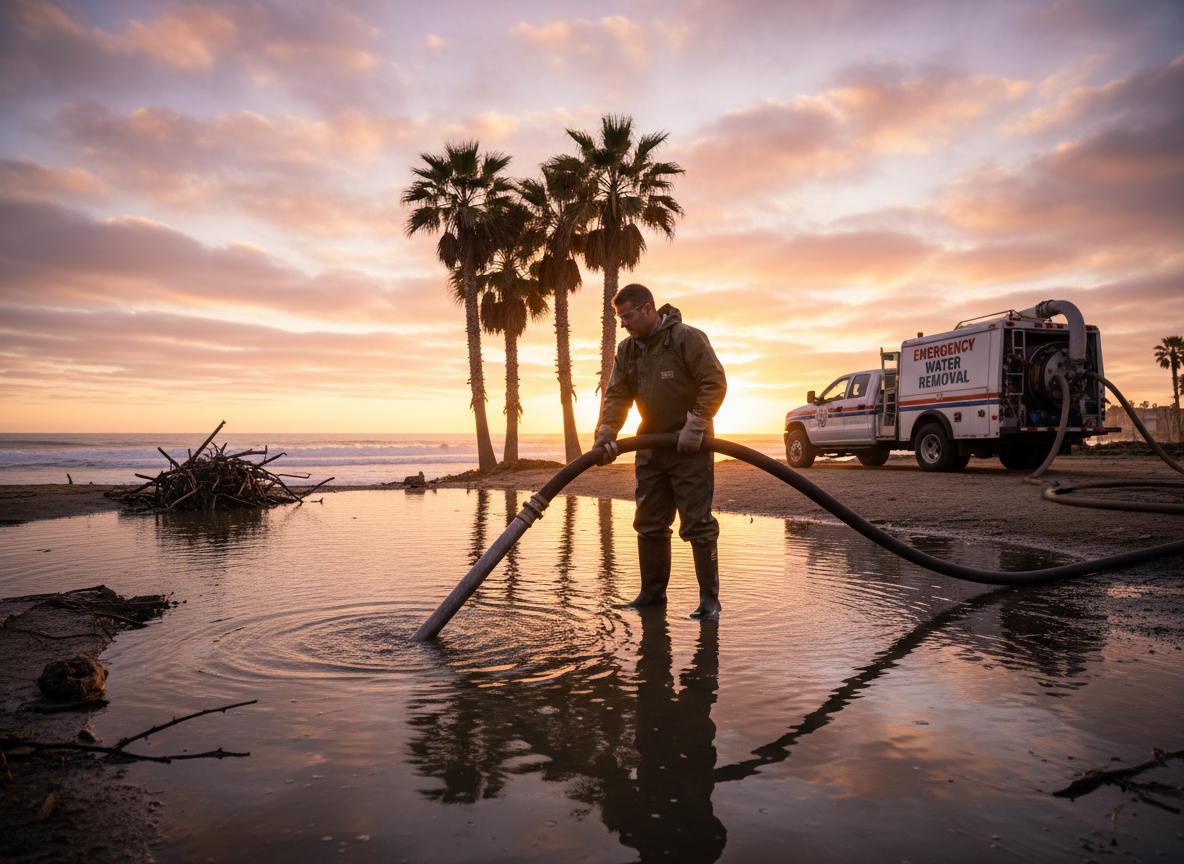
Water extraction in Sunset Beach must account for the mild coastal Mediterranean climate where cool summers keep humidity elevated even after the initial water is gone. Older beach cottages and mid-century homes along Pacific Coast Highway often have slab foundations and limited crawlspace access, so crews use portable extractors with narrow wands to pull water from under cabinets and behind toe kicks without tearing up original hardwood. Salt air accelerates corrosion on metal subfloor fasteners, which means extraction teams check for hidden moisture pockets that can wick back into drywall weeks later if missed.
Standing water from ocean-adjacent flooding carries fine sand that clogs standard shop-vac filters faster than inland jobs. Technicians pre-filter through mesh screens and stage dehumidifiers immediately because the cool marine layer slows natural evaporation. In neighborhoods near the Sunset Beach pier, narrow lots and shared driveways require compact equipment so extraction can finish before evening fog rolls in and raises indoor humidity again.
Edge cases include water trapped in the void spaces of pier-and-beam homes common west of Pacific Coast Highway. Extraction here uses moisture meters to confirm removal down to 12-14% wood moisture content before stopping, because residual dampness invites dry-rot fungi that thrive in the area’s consistent 60-70 degree temperatures. Crews also watch for backflow from nearby storm drains that can reintroduce water hours after the first pass.
Homeowners in Seal Beach and Huntington Beach borders sometimes see water migrate under shared property lines, requiring coordination with neighbors before full extraction. The process always ends with infrared scans to verify no pockets remain under tile or vinyl, preventing hidden mold growth during the long shoulder seasons when windows stay closed.
Technician insight
In Sunset Beach the thing that catches most people out with water extraction is how the cool marine layer keeps humidity high enough that water under pier-and-beam floors never fully leaves without forced drying. Homeowners shut the windows thinking it will help, but that traps the moisture and lets it wick back into drywall overnight.
Cottage Flood After Winter Rain
Water entered a 1950s pier-and-beam home near the pier when a clogged downspout overflowed during a cool-season rain. Extraction crews found standing water trapped above the vapor barrier and sand carried in from nearby streets. They used narrow wands to clear the voids, set dehumidifiers against the marine humidity, and confirmed dry readings before leaving.
How it works
- 1
Site Assessment
Technicians arrive within the hour, map water migration paths through Sunset Beach homes, and identify affected materials using moisture meters.
- 2
Water Removal
Portable extractors pull standing water from slabs, carpets, and subfloors while pre-filtering sand common in coastal flood events.
- 3
Moisture Verification
Infrared cameras and pin meters confirm extraction reaches safe levels in older wood framing and under tile typical of local cottages.
- 4
Equipment Setup
Air movers and dehumidifiers are positioned to counter the marine layer humidity that slows drying in Orange County coastal homes.
- 5
Final Check
Second scan ensures no hidden moisture remains before equipment is removed, preventing callbacks from salt-air corrosion issues.
Pricing
Cost depends on water volume, access in older coastal homes, and whether sand filtration or extended drying time is needed due to marine humidity.