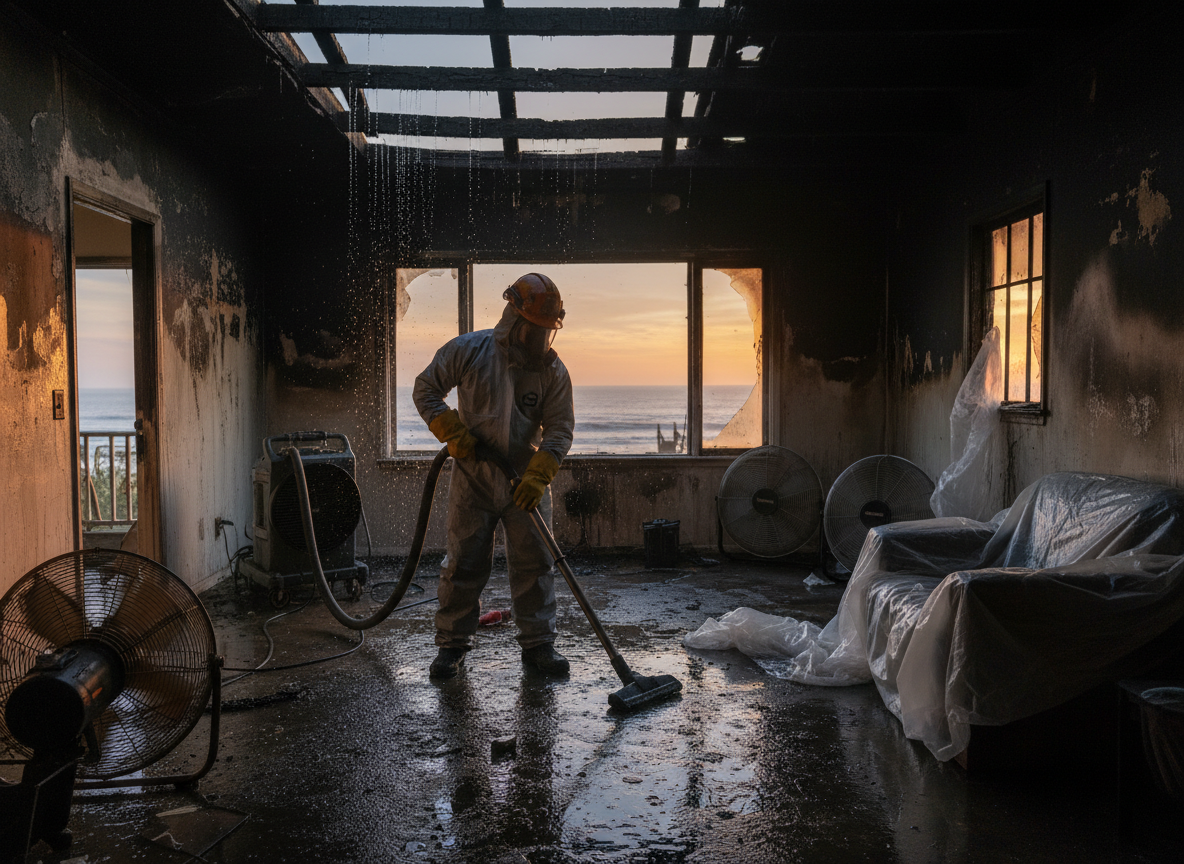
Firefighting efforts in Sunset Beach often introduce large volumes of water into older beach cottages and mid-century homes along Pacific Coast Highway. This water quickly migrates into crawl spaces and wall cavities common in the area's sandy-soil foundations. Without rapid extraction, residual moisture combines with soot to create hidden corrosion on metal framing and electrical components. Technicians must account for the mild coastal Mediterranean climate that slows natural evaporation even in summer, leaving hidden pockets of dampness that can lead to secondary mold growth within 48 hours.
Remediation crews at 16812 Pacific Coast Hwy begin by mapping moisture with thermal imaging to locate water trapped behind stucco and plaster unique to local construction. Negative air machines capture smoke particulates while dehumidifiers pull moisture from hardwood floors that expand in the region's humidity. In homes near the beach, salt air accelerates rust on fasteners, so crews treat affected metal early. All work follows Orange County building standards for ventilation and material removal to avoid recontamination during rebuild.
Edge cases include water that reaches shared walls in duplexes common along Seal Beach Boulevard, requiring coordination with adjacent properties. Crews also address HVAC systems that can spread soot and moisture throughout Huntington Beach-adjacent homes if not isolated immediately. Proper disposal of contaminated insulation prevents odor return once the structure dries.
Final verification uses moisture meters on multiple substrate types before any reconstruction begins, ensuring Sunset Beach properties meet dry standards suited to the local climate.
Technician insight
In Sunset Beach, the thing that catches most people out with water damage remediation after fire is how quickly moisture travels through the sandy soil under older cottages along Pacific Coast Highway. Homeowners often focus on visible puddles while water sits in crawl spaces for days, feeding mold in our cool-summer humidity. Checking under the structure early changes the whole job.
Cottage on Pacific Coast Hwy
Fire crews flooded a 1960s cottage near the beach. We found water had wicked into the perimeter framing and under the kitchen slab. Extraction and targeted drying over four days removed hidden moisture before mold could form, allowing the owner to begin repairs without further demolition.
How it works
- 1
Initial Assessment
Technicians arrive 24/7 and document all affected areas with photos and moisture readings.
- 2
Water Extraction
Industrial pumps and wands remove standing water from floors and cavities.
- 3
Drying and Dehumidification
Air movers and dehumidifiers run continuously while monitoring daily moisture levels.
- 4
Odor and Soot Removal
HEPA filtration and antimicrobial treatments address smoke residues left by fire suppression.
- 5
Final Clearance
Independent moisture verification confirms the structure is dry before reconstruction.
Pricing
Costs depend on square footage affected, depth of water penetration into walls and floors, and whether HVAC or electrical systems require isolation.