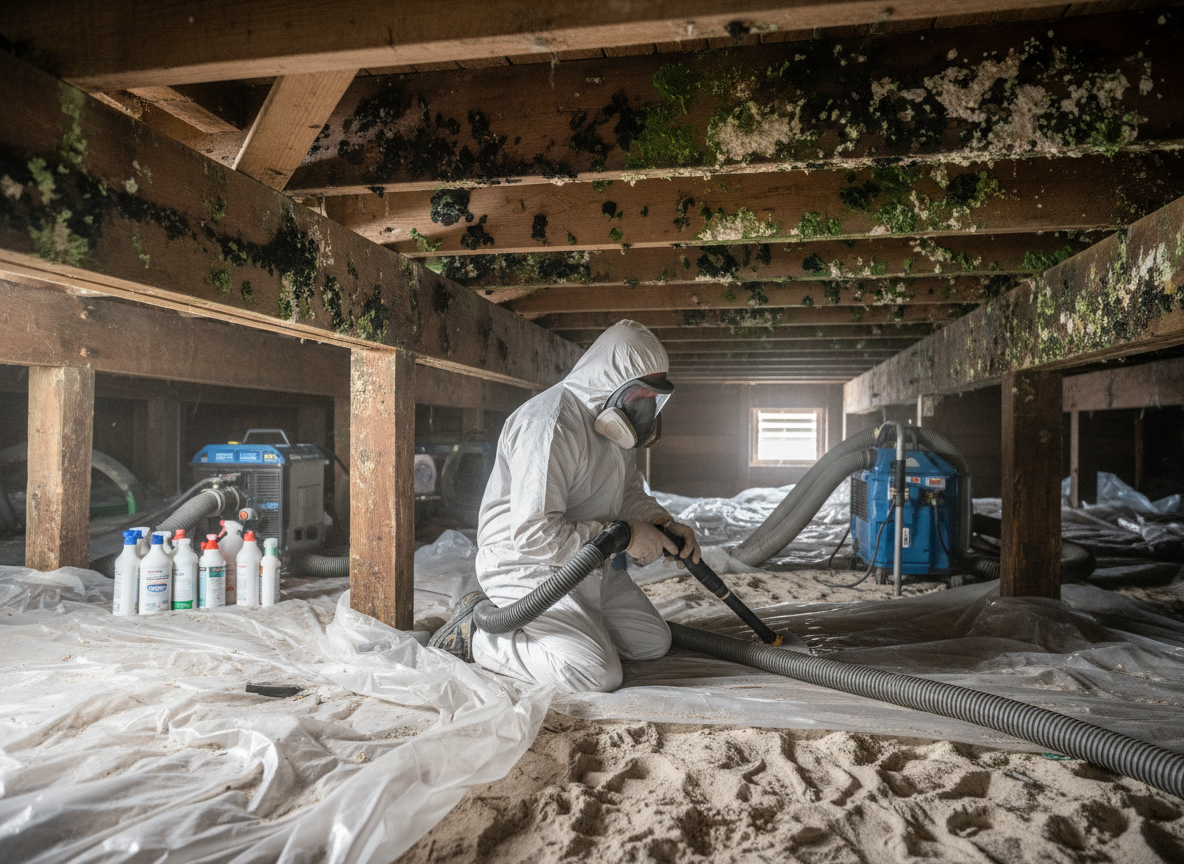
Sunset Beach sits on a narrow coastal strip in Orange County where many homes date from the 1940s through 1970s and rest on pier-and-beam foundations. The mild Mediterranean climate keeps summer temperatures moderate but allows persistent moisture to linger beneath floorboards, especially when salt-laden air meets cooler soil. This combination accelerates mold growth on joists, subflooring, and insulation. Technicians must account for limited access points, older electrical runs, and the risk of disturbing settled dust that contains both mold spores and fine sand from nearby dunes.
Removal begins with negative-air containment to keep spores from migrating into living areas. Crews use HEPA vacuums and antimicrobial agents rated for wood and concrete, then address any standing water that collects in low spots created by uneven settling near Pacific Coast Highway. In older bungalows close to the beach, vapor barriers are often missing or degraded, so crews install 6-mil reinforced liners sealed to foundation walls. Failure to seal these liners properly allows ongoing condensation that re-seeds mold within months.
Edge cases include mold that has crossed into wall cavities through rim joists or has affected HVAC ducts routed under the home. These situations require cutting access panels in finished spaces and coordinating with HVAC technicians to avoid spreading contaminants through the system. Local building practices in Seal Beach and Huntington Beach also mean some crawl spaces sit partially below grade, increasing hydrostatic pressure after winter rains and demanding extra drainage corrections before mold work can be considered complete.
Homeowners should expect follow-up moisture readings taken at multiple points over several days. Without documented drying below 12 percent wood moisture content, any new insulation or flooring installed later will likely fail. Crews document every step with photos because Orange County inspectors may request proof that hidden mold was addressed before resale or remodeling permits are issued.
Technician insight
In Sunset Beach, the thing that catches most people out with crawl space mold removal is how the cool ocean air and salt spray keep relative humidity high year-round even when the house feels dry upstairs, especially in homes built before vapor barriers were common along Pacific Coast Highway.
Musty Odors After Winter Rains
A Sunset Beach homeowner reported persistent odors following several rainy weeks. Inspection revealed black mold on joists where a missing vapor barrier allowed moisture to pool near the foundation. We contained the space, removed affected materials, installed a sealed liner, and ran dehumidification until readings dropped below target levels. Odors disappeared and the crawl space stayed dry through the next coastal fog season.
How it works
- 1
Initial Assessment
Technicians enter the crawl space from Sunset Beach access points, map moisture levels, identify mold types, and note structural concerns such as corroded hardware from salt air.
- 2
Containment Setup
Negative air machines and plastic barriers isolate the work zone so spores cannot reach living areas or neighboring homes along Pacific Coast Highway.
- 3
Mold Removal and Cleaning
HEPA vacuuming, antimicrobial treatment, and removal of affected insulation or wood are performed, followed by disposal of contaminated materials according to local Orange County guidelines.
- 4
Drying and Prevention
Dehumidifiers and air movers reduce moisture, new vapor barriers are installed, and ventilation is improved to match the cool, humid coastal conditions typical here.
Pricing
Pricing varies by crawl space size, mold extent, and access difficulty; we provide written quotes after the on-site inspection.