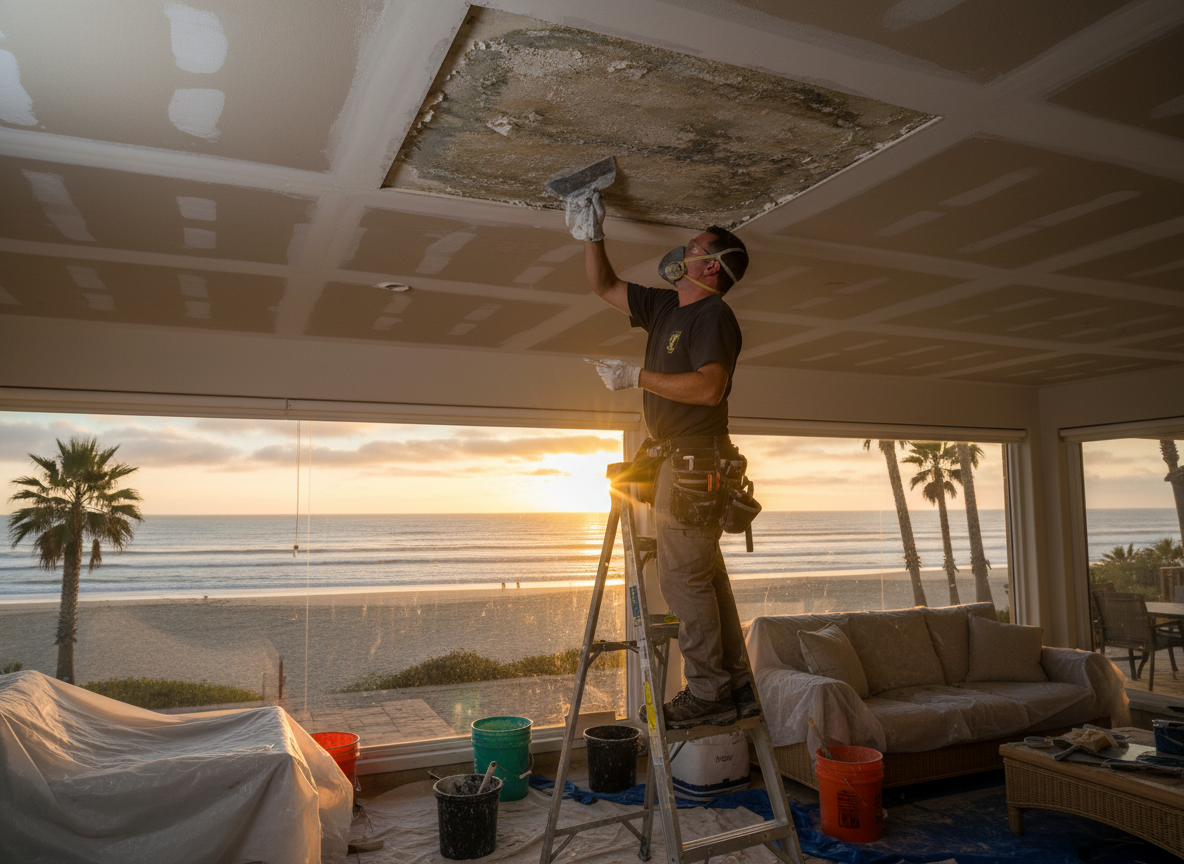
Sunset Beach homes often feature older plaster ceilings that absorb water differently than modern drywall, especially in the mild Mediterranean climate where cool summers still bring persistent coastal humidity. When leaks occur from aging rooflines or upstairs plumbing, water travels along lath and can pool unseen until staining appears. Technicians must remove affected sections carefully to avoid spreading hidden moisture into adjacent walls or attics common in these beachside bungalows.
Salt air in Orange County coastal neighborhoods like Sunset Beach and nearby Seal Beach accelerates corrosion on metal fasteners and HVAC components above ceilings. This means standard drying times extend because residual moisture bonds with salts. Proper repair includes treating the substrate before new materials go in, plus checking for mold growth that thrives in the steady humidity even without heavy rain.
Access is frequently limited in these single-story and low-pitched roof homes, requiring precise demolition to reach wet insulation without disturbing electrical runs or original woodwork. Technicians document every step for insurance and ensure the ceiling is returned to a seamless finish that matches surrounding surfaces. Ignoring the salt and humidity factors often leads to recurring stains within months.
Technician insight
In Sunset Beach, the thing that catches most people out with Ceiling water damage repair is how salt-laden air from the Pacific makes even small leaks spread farther in plaster before anyone notices. Homes built before the 1970s near Pacific Coast Highway often have lath that holds moisture longer than expected, so skipping the full drying cycle almost always means stains return after the first cool summer fog.
Upstairs Bath Leak in Sunset Beach Bungalow
A slow drain leak above the living room ceiling went unnoticed for weeks. We found water had wicked along plaster lath into two joist bays. After targeted removal, drying, and new drywall with corrosion-resistant fasteners, the ceiling was restored without visible seams.
How it works
- 1
Initial Assessment
Inspect the ceiling from above and below to trace the leak source and map moisture extent in Sunset Beach properties.
- 2
Water Extraction and Drying
Remove standing water and deploy dehumidifiers suited to coastal humidity levels until readings stabilize.
- 3
Damaged Material Removal
Cut out compromised plaster or drywall sections while protecting adjacent areas common in older Orange County homes.
- 4
Repair and Finish
Install new materials, match textures, and apply treatments that resist local salt air corrosion.
Pricing
Cost depends on ceiling height, extent of hidden damage, and whether plaster or drywall is involved.